Most failed hires looked perfect on paper.The risk wasn’t skill. It was fit.
Trusted by teams across the GCC
Hiring decision
When two candidates look equally strong
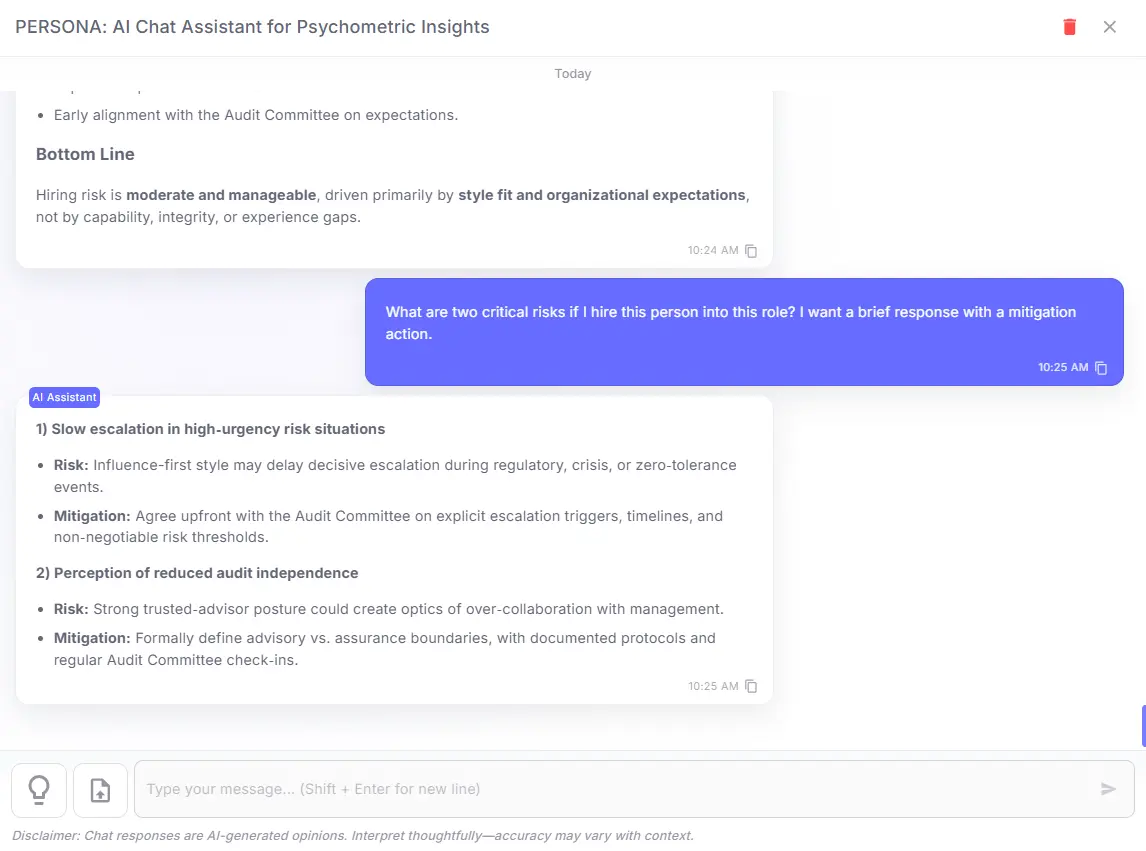
“What are the risks if I hire this person into this role?”
Final interviews often surface preference, not clarity.
Both candidates meet the requirements.
Both interview well.
Yet only one will truly succeed in this environment.
This is where hiring decisions usually become subjective — unless you can
clearly see how each person is likely to operate once hired.
Surface role-specific risk before making the offer
Make the final decision with confidence, not instinct
Preview×
Promotion decision
Before promoting someone into leadership
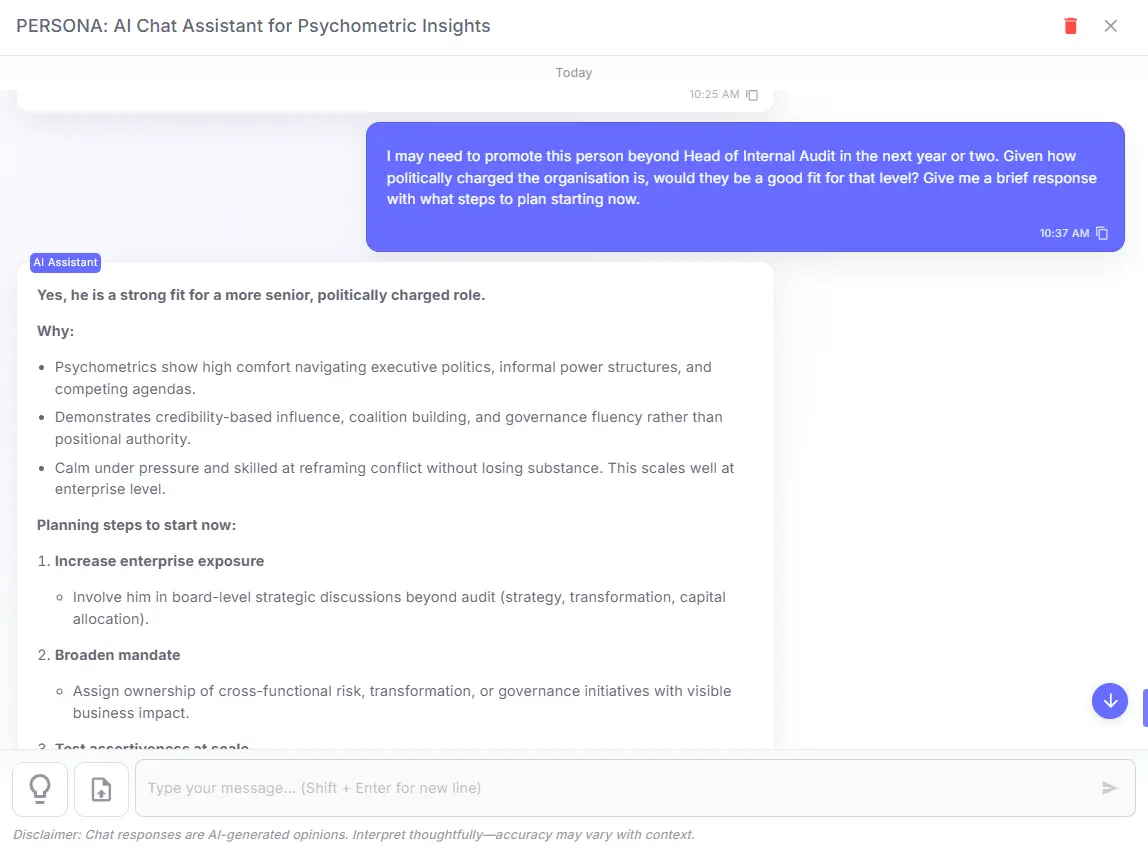
“I may need to promote this person beyond Head of Internal Audit in the next year or two.
Given how politically charged the organisation is, would they be a good fit for that level?”
High performers are often promoted for success in their current role.
That does not guarantee success in environments with higher pressure,
visibility, and political complexity.
Separate performance from readiness
Expose political and influence risks early
Reduce long-term leadership failure
Preview×
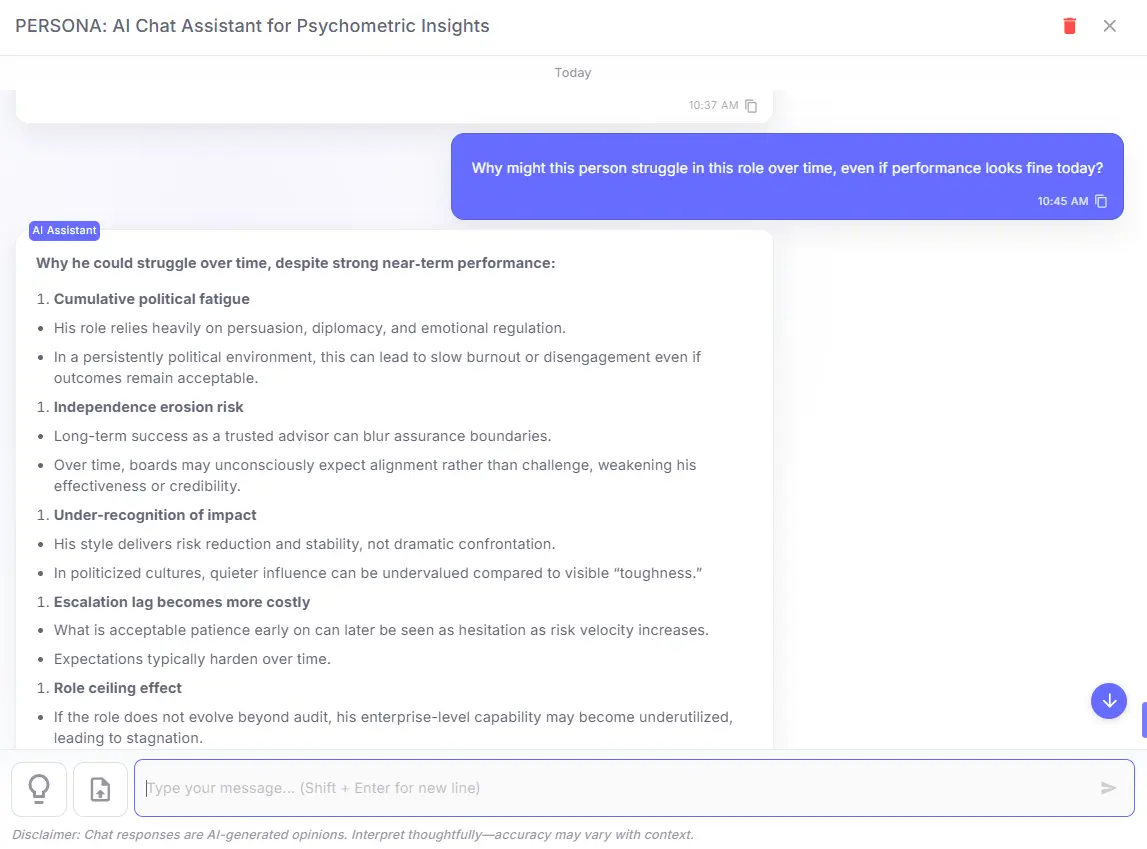
Role fit validation
When performance is fine, but something feels off
“This person is performing well, but I’m not convinced this role truly suits them long term.
What risks should I be aware of if nothing changes?”
Not all problems show up as missed targets.
Some appear as friction, stress, or quiet disengagement over time.
Leaders often sense this early but struggle to articulate it clearly
— until the cost of waiting becomes visible.
Identify misalignment before performance drops
Understand stress and friction patterns
Decide whether to adapt the role or expectations
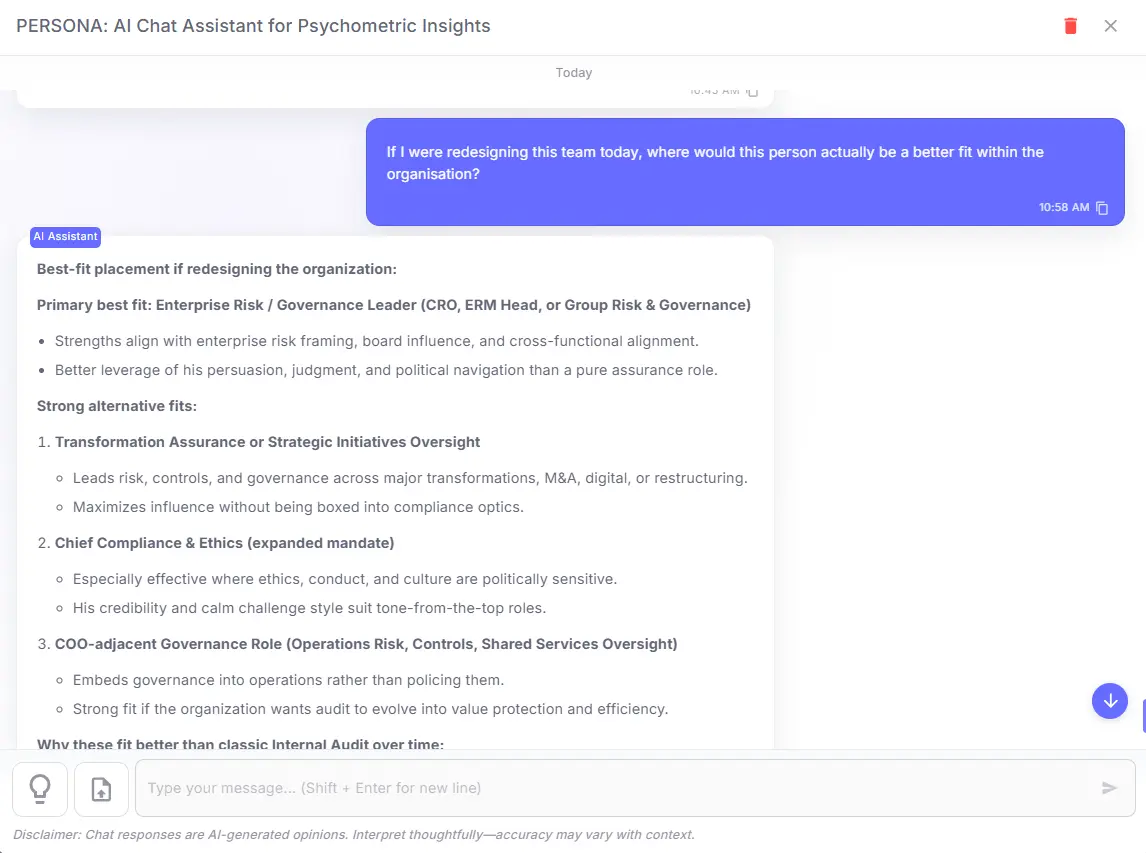
Organisation design & restructuring
The right people, in the wrong seats
“If I were redesigning this team today, where would this person actually be a better fit?”
During restructuring, leaders often face a difficult reality.
The problem is not capability — it is placement.
Moving the wrong person out can damage morale.
Leaving the right person in the wrong role quietly limits performance.
Identify natural strengths beyond current titles
Reduce political risk during role changes
Redesign teams with confidence, not guesswork
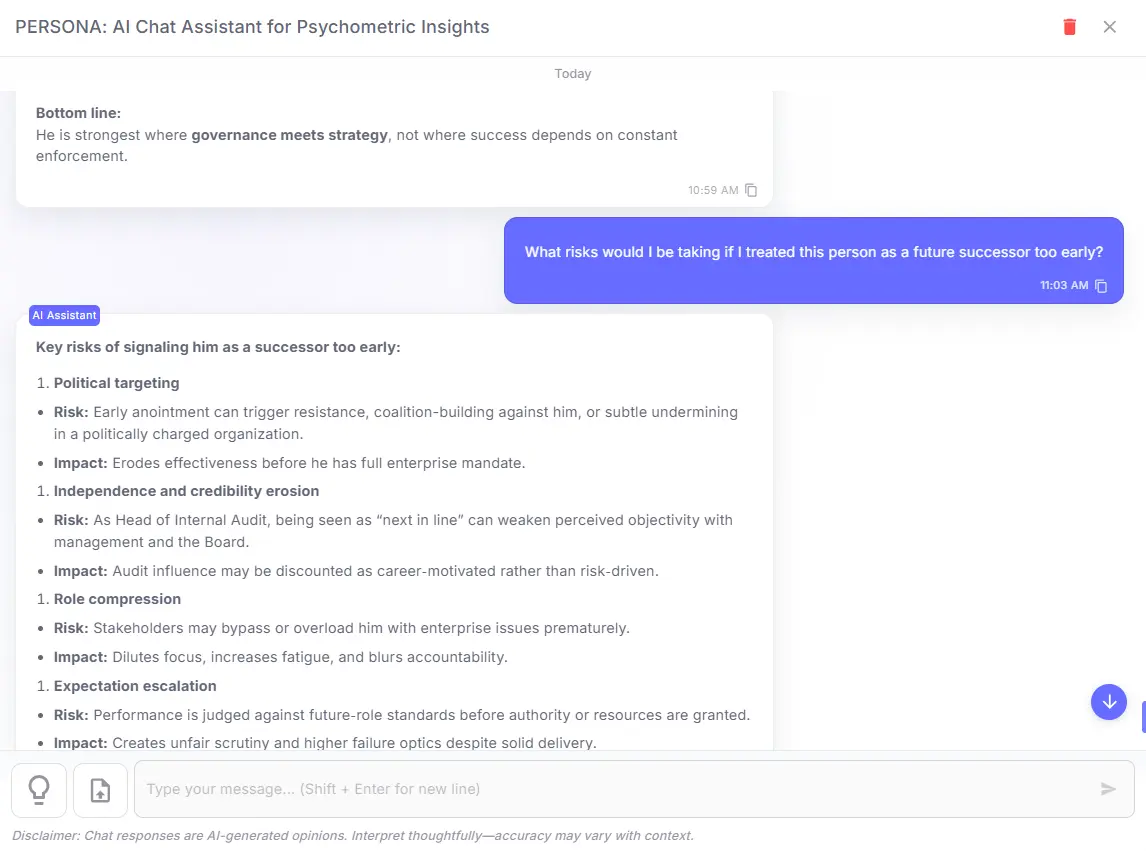
Succession planning
Strong today does not always mean ready for tomorrow
“If this person had to step into a bigger leadership role in the next two years,
what would they struggle with?”
Succession decisions are rarely about skills alone.
They are about pressure, visibility, and influence.
Promoting too early can destroy potential.
Waiting too long can lose it.
Understand leadership readiness before it is tested
Identify development gaps early
Plan succession without forcing timelines
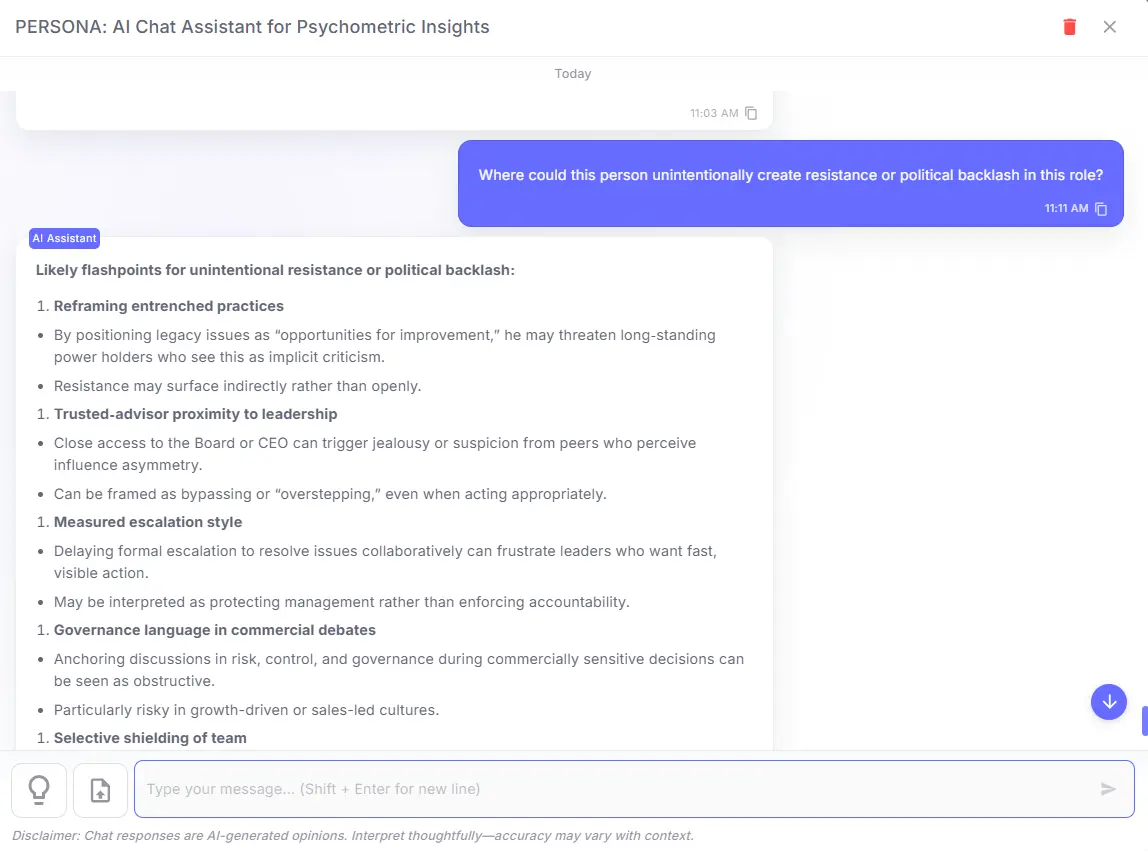
High-risk leadership decisions
When capability is not enough to survive the politics
“This role is politically sensitive. What risks do I take if I put this person here?”
Some roles fail not because of skill gaps,
but because of internal alliances, loyalty shifts, and informal power structures.
These failures rarely surface in interviews —
and by the time they do, the damage is already done.
Assess political awareness and resilience
Understand how influence is likely to be earned or resisted
Reduce the cost of senior mis-hires
Final decision check
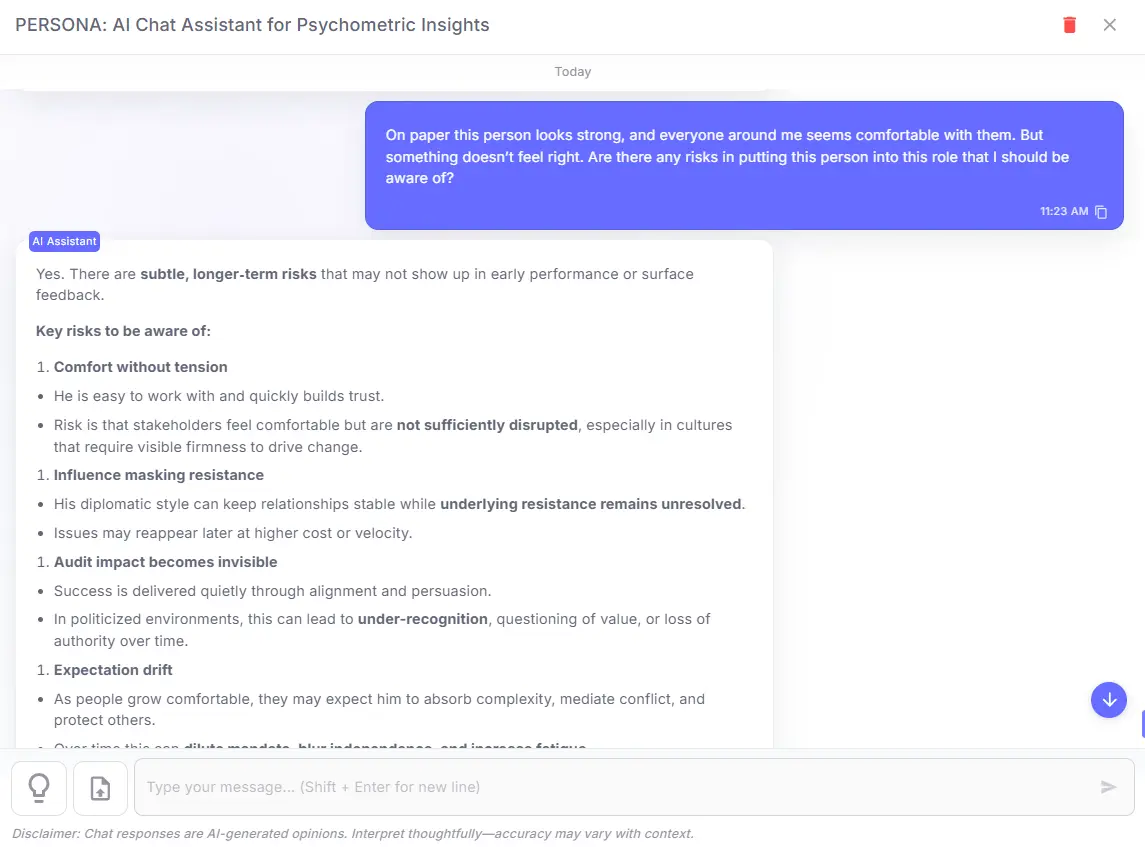
When something feels off — but you can’t explain why
“On paper this candidate looks strong, and everyone seems comfortable with them.
But something feels off.
Are there any hidden risks in putting this person into this role?”
Senior hiring decisions often fail not because of skill gaps,
but because subtle behavioural or cultural risks were ignored.
These risks are hard to articulate, but expensive to discover later.
Surface risks that don’t appear on a CV
Validate instinct with structured evidence
Avoid costly leadership misfires
See it live
If these scenarios feel familiar, you are already making decisions
that would benefit from clearer signals and fewer blind spots.
A short walkthrough shows how leaders use structured insight
to validate judgement, surface risk, and move forward with confidence.
Most people know within 15 minutes whether this would change how they hire.