
Supporting Guide
For CHROs: Workforce Risk Visibility Across Leadership, Succession, and Critical Roles
CHRO decisions are not only about filling vacancies. They are about protecting business continuity, leadership quality, and execution reliability across the roles that matter most.
This guide explains how structured hiring signals, pipeline analytics, and psychometric evidence create earlier visibility into workforce risk so intervention happens before loss compounds.
Risk Lens
Workforce risk visibility starts with a shared operating view across leadership and TA.
When critical roles are tracked only as open or closed, risk remains hidden. CHROs need visibility into cycle velocity, quality of shortlist evidence, and confidence in successor readiness.
- Leadership roles open for too long can slow transformation priorities.
- Weak succession visibility increases continuity risk when key people leave.
- Critical roles can appear filled on paper but remain under-covered in capability.
- Pipeline delay without stage transparency drives avoidable candidate loss.
Leadership Hiring and Succession
Timeline transparency reduces silent failure in leadership hiring cycles.
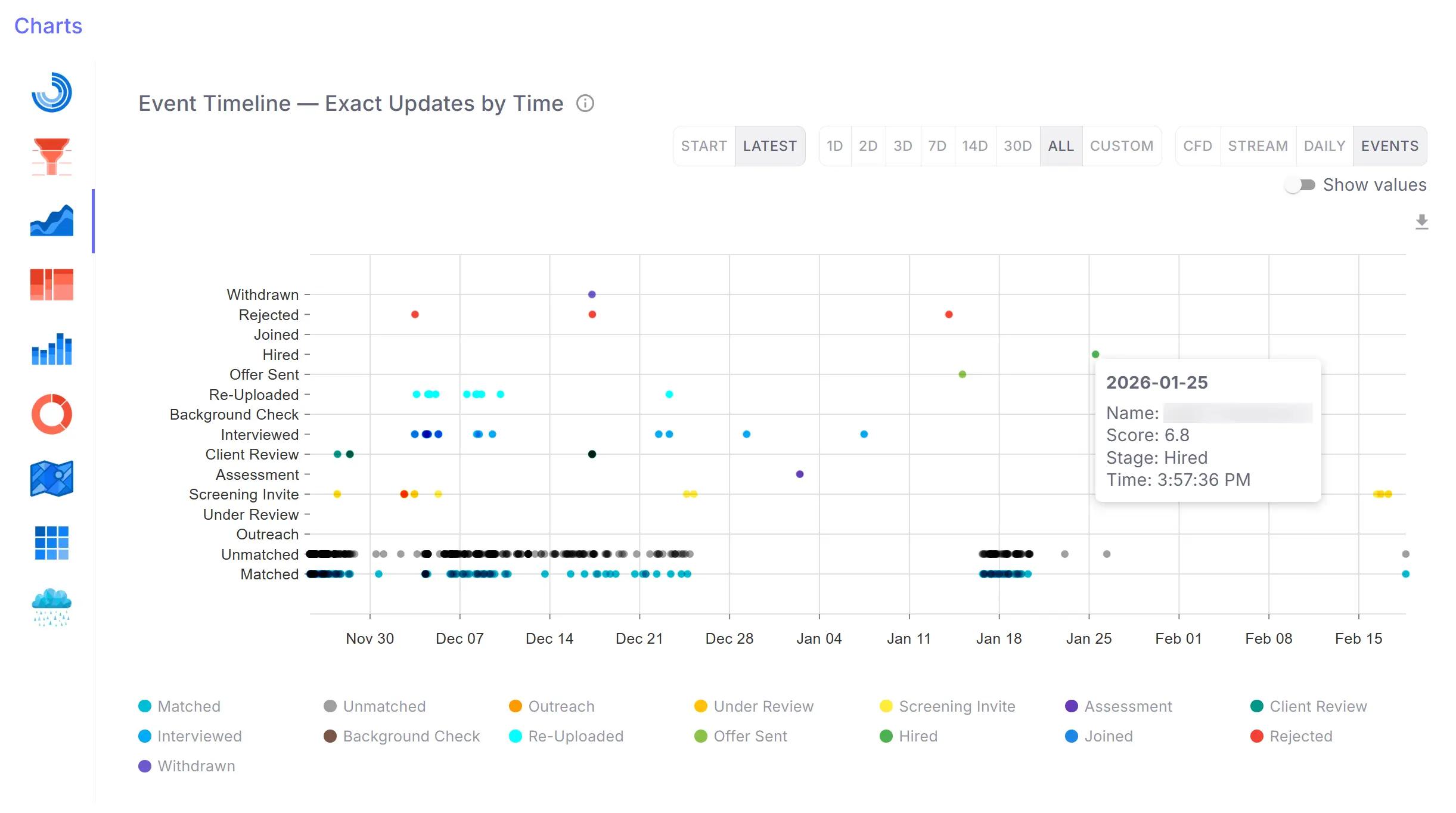
Senior hiring often fails gradually: delayed feedback, unclear ownership, and long stage gaps. A visual pipeline timeline allows CHROs to see where decision latency appears and where top talent disengagement risk increases.
The priority velocity view can be reviewed in detail in Priority Role Velocity by Sector.
Role Criticality
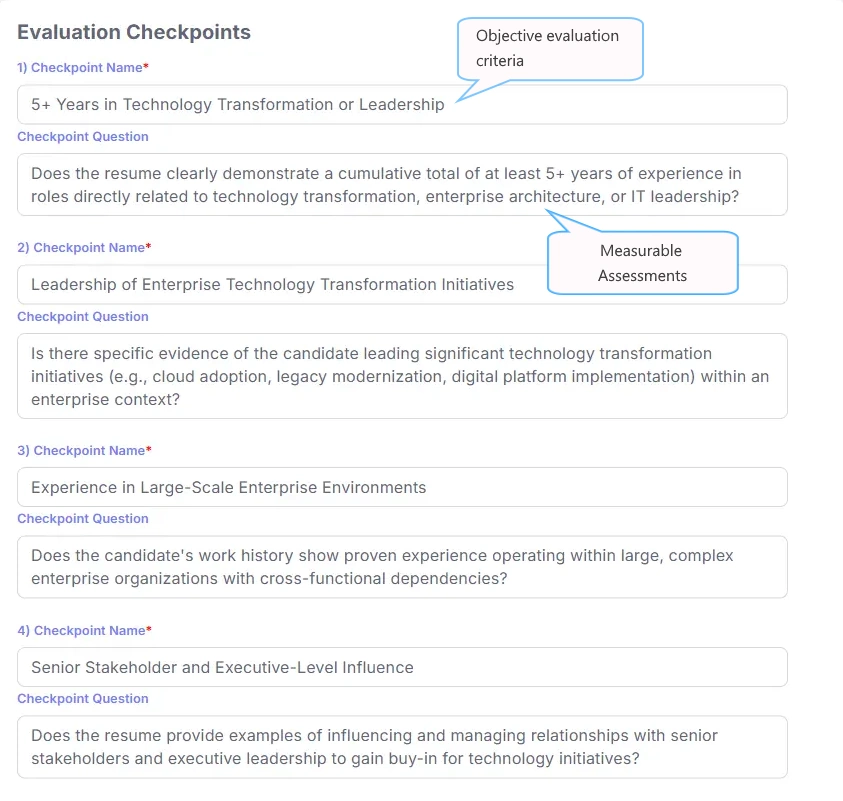
Critical role decisions improve when success criteria are explicit before sourcing.
Critical roles should not start with generic job templates. They need clarity on outcomes, measurable checkpoints, and decision thresholds. This is the foundation covered in Role-Fit Clarity.
Once checkpoints are agreed, shortlisting becomes more consistent and role-risk discussions become easier to defend at executive level.
Persona and Psychometrics
CHROs need behavioral and potential signals alongside CV-based evidence.
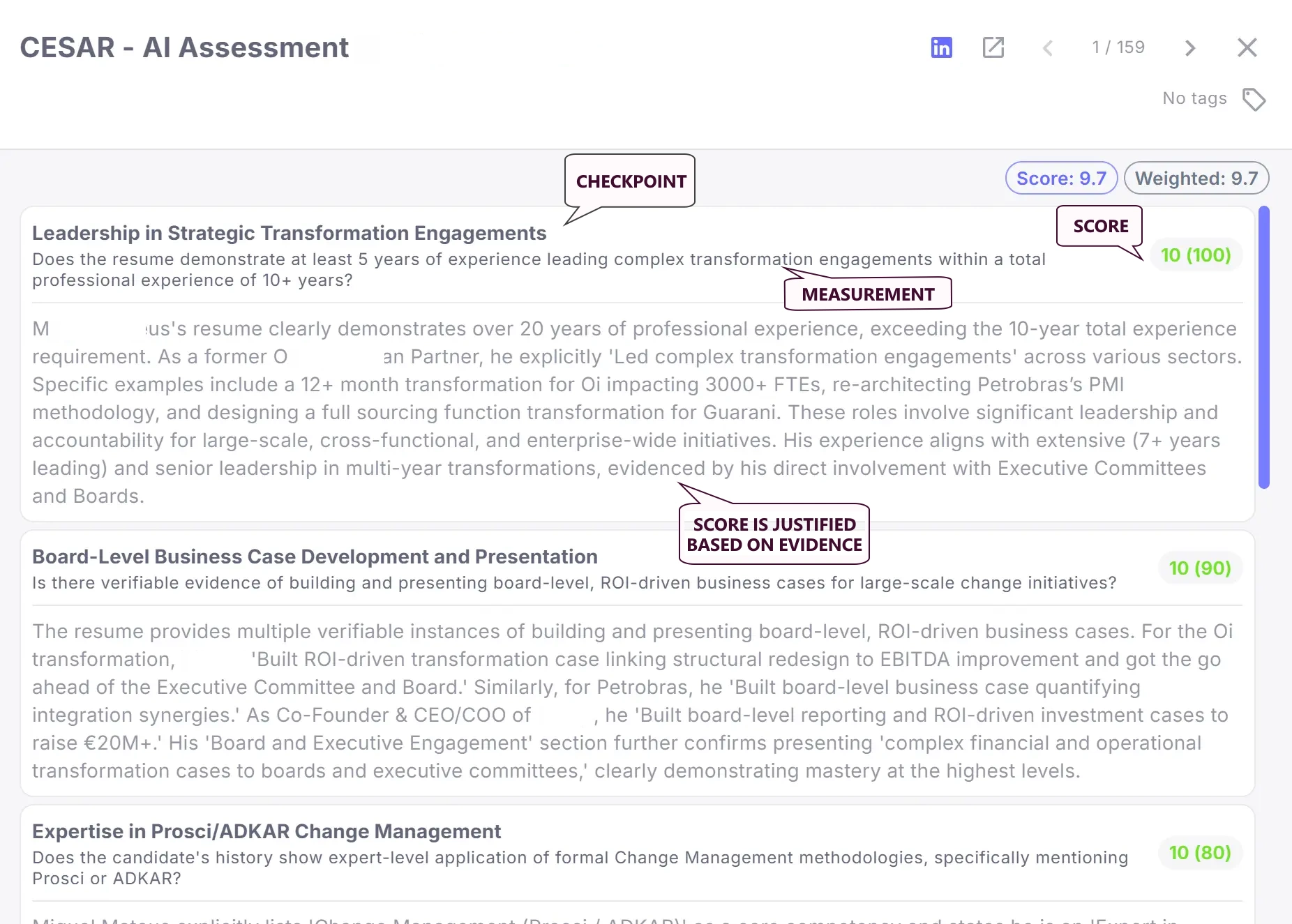
Psychometric intelligence adds depth where resume signals are not enough, especially for leadership roles where decision style, adaptability, and influence behavior affect business outcomes.
Structured scoring should remain objective and auditable, as covered in Bias-Free Evaluation and Scoring. Candidate trade-offs can then be reviewed in Structured Candidate Comparison. For a deeper psychometric methodology lens, see Persona methodology.
Operating Model
Risk visibility is strongest when role quality, market pressure, and feasibility are connected.
CHRO teams can run a single operating model where role definition, scoring quality, compensation pressure, location feasibility, and velocity signals are reviewed as one decision system.
Compensation and location dynamics should be monitored through Compensation and Scarcity Signals and Location-Specific Hiring Feasibility.
Governance improves further when hiring managers are active in the workflow, not only final approvers. ARIC on byteSpark.ai helps managers interrogate evidence consistently and collaborate with recruiters using one decision language. Continue with Hiring Manager Interview Focus and Validation.
- Role-Fit Clarity
Define success checkpoints before outreach starts.
- Structured Candidate Comparison
Compare finalists against one evidence model, not fragmented notes.
- Bias-Free Evaluation and Scoring
Keep scoring objective and traceable at criterion level.
- Compensation and Scarcity Signals
Calibrate budget against market pressure early.
- Location-Specific Hiring Feasibility
Plan for mobility, visa, and location constraints before delay builds.
- Priority Role Velocity by Sector
Align timeline expectations to real movement by talent segment.
- Hiring Manager Interview Focus and Validation
Equip hiring managers with ARIC to improve interview quality before, during, and after interviews.
Operating Checklist
Use this to strengthen CHRO decision visibility across critical mandates.
- Classify leadership and critical roles by business impact, not only job grade.
- Set expected timeline thresholds by role segment and monitor weekly.
- Use role-fit definitions before sourcing to reduce low-fit funnel volume.
- Review shortlist evidence in one comparison model before final interviews.
- Add psychometric signals for role-risk decisions where leadership behavior matters.
- Escalate quickly when compensation, location, or timeline signals show mismatch.
Continue with the full decision framework.
Return to the resource hub or review role-fit setup for your next leadership mandate.