
Manual-heavy workflow
~85 days
Long handoffs and repeated re-screening extend cycle time and increase candidate drop-off.
Supporting Guide
TA leaders are under pressure from both sides: hiring managers expect stronger candidates faster, while recruiters are overloaded with volume and changing requirements.
This guide explains how a shared AI-assisted operating model improves speed, quality, and control while reducing rework across the recruitment workflow.
TA Reality
In high-volume hiring, manual methods cannot reliably keep up with role complexity, stakeholder expectations, and rapid market movement.
Goalpost Drift
This is normal in complex roles, but without structure it creates repeated sourcing loops and weak trust between TA and hiring teams.
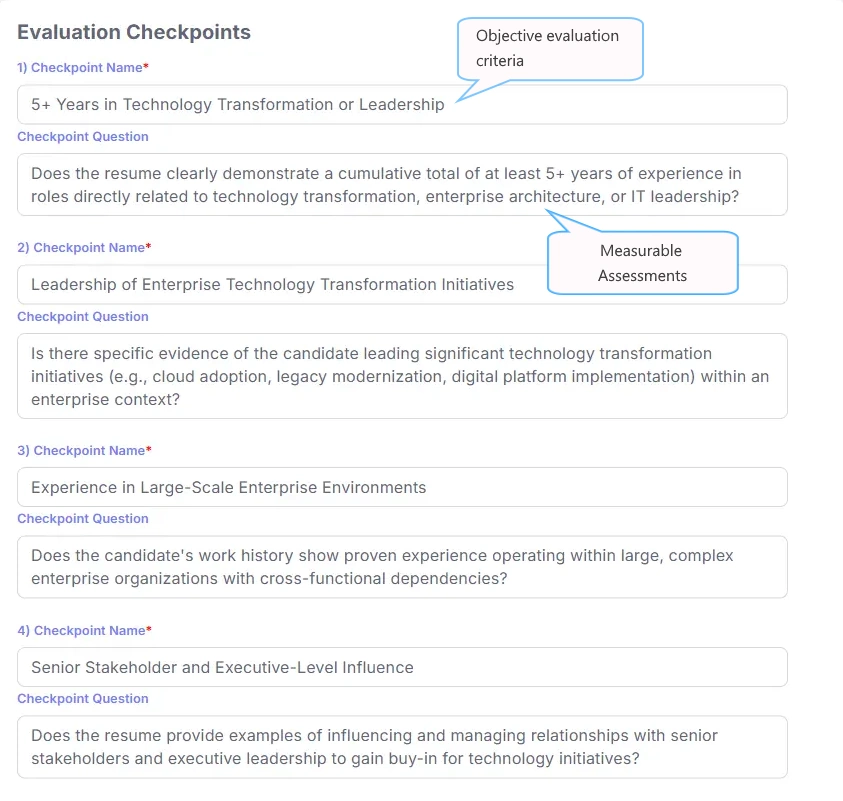
A structured approach starts by defining checkpoints in Role-Fit Clarity, then allowing controlled updates when new insight is valid.
Re-evaluation Capability
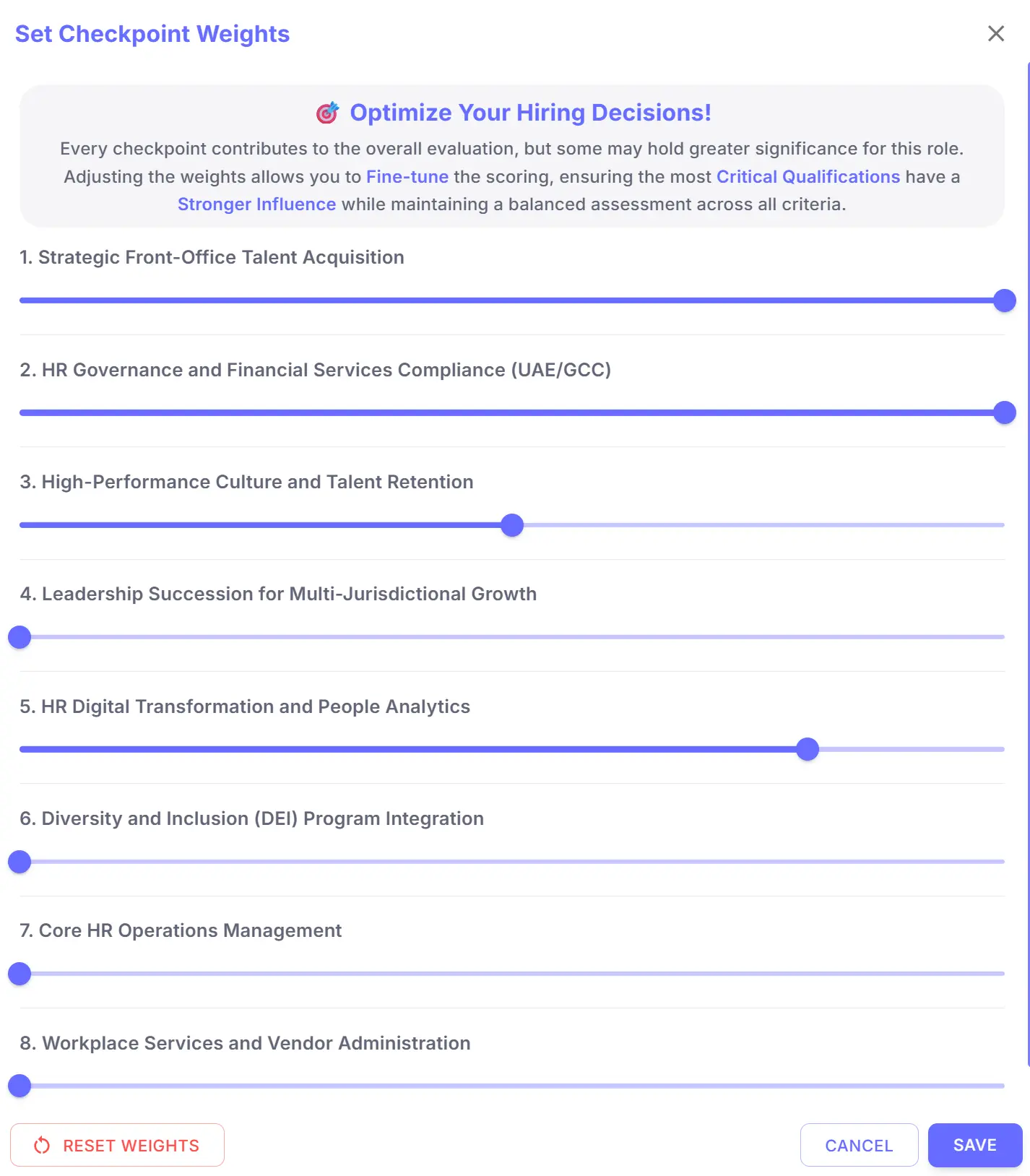
When goalposts shift, teams should not lose days manually re-reading every profile. AI-assisted re-evaluation can re-score existing candidates against updated checkpoints and quickly surface who now qualifies, who drops, and why.
A common TA reality is the CANFROG brief, a CANdidate FROm God profile where every requirement is set to maximum priority. In practice, that profile may not exist in market conditions. When hiring managers adjust priorities to match business reality, the platform can instantly re-rank the same pool based on the updated weight model.
This keeps TA leaders in control of quality while reducing wasted recruiter effort and minimizing cycle disruption.
Advanced Filtering Layer
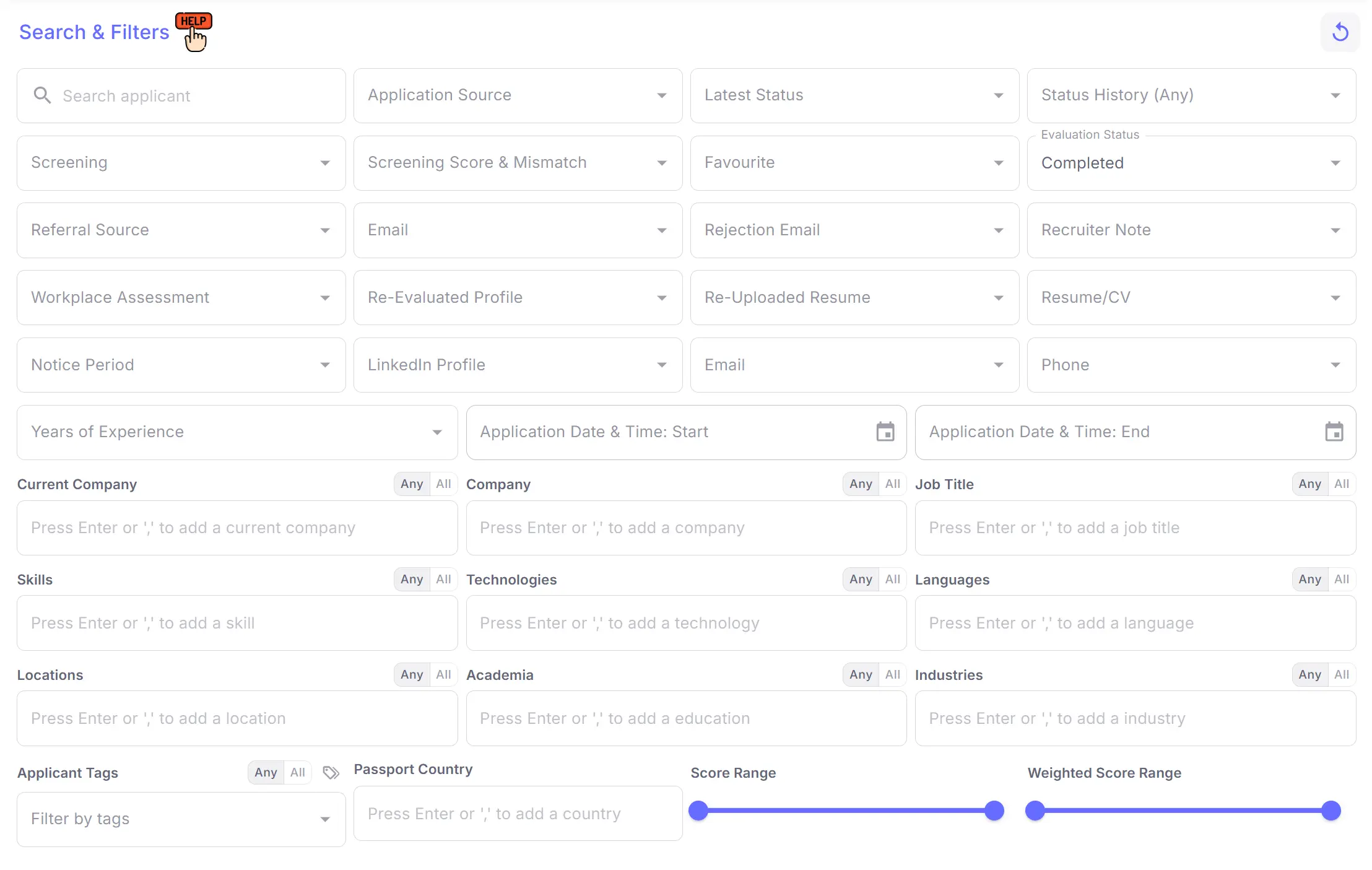
The advanced filtering layer helps stakeholders narrow the pool using practical selection signals after initial scoring is complete. This gives teams flexibility while keeping early-stage evaluation consistent and auditable.
This is important for bias control. These filters are not injected into first-pass scoring, which protects the objective process defined in Bias-Free Evaluation and Scoring. The result is better recruiter focus on what matters most for role delivery.
Role Launchpad Ownership
The more hiring managers co-own the role definition, the less burden sits on recruiters to infer expectations under uncertainty. This improves quality at source and reduces late-stage reversal.
TA leaders gain stronger governance when role criteria are explicit, versioned, and visible to all stakeholders from day one.
Cycle-Time Impact
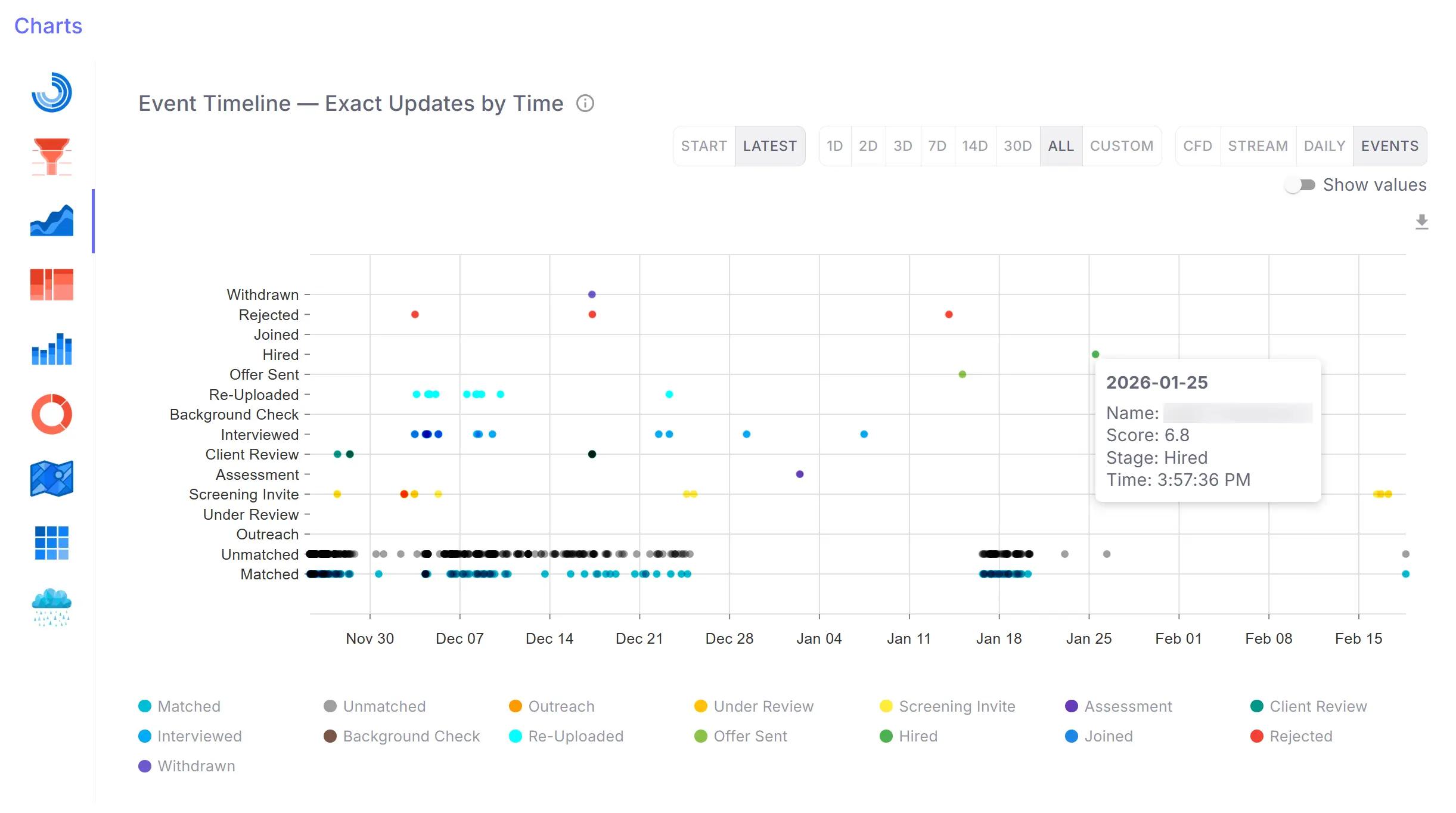
In many recruitment environments, teams lose up to 60% of their time on CV reading and manual shortlisting loops. A true AI-enabled workflow can materially compress cycle time and improve signal quality.
Manual-heavy workflow
Long handoffs and repeated re-screening extend cycle time and increase candidate drop-off.
AI-enabled workflow
Shared platform workflows and faster re-evaluation improve speed while preserving decision control.
With one platform where recruiters, hiring managers, and leadership participate in the same workflow, teams can move from long cycles near 85 days toward approximately 30-day execution on many role segments.
Operating Checklist
Pair this with Structured Candidate Comparison and Priority Role Velocity by Sector to maintain control as hiring scales. To operationalize hiring-manager participation with ARIC, continue with Hiring Manager Interview Focus and Validation.
Return to the resource hub, then we can build the hiring-manager guide next.